Today, Barry woke up and believed the following three things were truly important in life.
One: dinosaurs.
Two: biscuits.
Three: buttons that said DO NOT PRESS.
This was unfortunate for everyone around him.
At four years old, Barry had the kind of face that made strangers smile warmly while he accidentally caused small-scale disasters behind them. Alfie, his brother, seven, had already developed the exhausted expression of a middle-aged accountant.
“Barry,” Alfie often said, adjusting his glasses dramatically despite not actually needing glasses, “you must think about consequences.”
Barry usually replied, “I did think about consequences.”
“And?”
“I thought they sounded boring.”
Their parents worked all the time. Mum answered emails while making toast. Dad attended online meetings while brushing his teeth. Sometimes both of them spoke at once into different headsets and accidentally answered each other instead of their bosses.
“No, Karen, Barry cannot have another yoghurt.”
“Actually, Steve, quarterly figures are very sticky.”
So Barry had freedom.
Far too much freedom.
And his best friend Marmaduke was absolutely no help whatsoever.
Marmaduke was also four, and had the personality of an enthusiastic golden retriever wearing tiny shoes. If Barry suggested climbing something dangerous, Marmaduke would ask only one question:
“Will there be snacks?”
Today was World Oceans Day.
And today was going to be a problem.
“Miss Patel is poorly,” announced Mrs Patterson to the preschool class that morning.
The children gasped as though she’d announced the moon had exploded.
Mrs Patterson was the head of preschool. She wore colourful scarves, sensible shoes, and the expression of someone who had once seen a child lick a battery and had never fully recovered.
“So,” she continued bravely, “I shall be taking you all to the London Sea Life Aquarium myself.”
The children cheered.
Mrs Patterson smiled nervously.
She had no idea what awaited her.
At exactly 8:30 a.m., the preschool class entered the Tube station.
Rush hour was in full swing.
Adults stormed through the station clutching coffees and despair. The train platforms smelled faintly of rain, newspapers, and someone’s suspicious egg sandwich.
“Everybody hold hands!” cried Mrs Patterson.
Barry and Marmaduke pressed their faces against the Tube map.
“Look,” whispered Barry. “We could go to a place that begins with M for mummy.”
“Why?” asked Marmaduke.
“No idea.”
“Brilliant.”
Alfie, who attended the primary school next door and had been allowed to join as a “responsible older sibling helper,” marched behind them carrying emergency tissues and a list of children’s allergies.
“Do not wander off,” Alfie warned.
“We won’t,” said Barry.
Which, technically, was true for almost six entire minutes.
The train arrived with a howl.
Everyone squeezed aboard.
Barry immediately discovered the emergency alarm panel.
“Oh no,” muttered Alfie.
“What does THIS button do?”
“Barry, don’t—”
Too late.
A loud recorded voice boomed through the carriage.
“Passenger alarm activated.”
The entire train froze.
Commuters stared.
Mrs Patterson went pale enough to qualify as aquarium coral.
Barry blinked innocently. “Maybe it’s haunted.”
A businessman sighed so deeply it sounded medically serious.
By the time they reached the aquarium at around 10:30, Mrs Patterson already looked ten years older.
The children were herded into a lecture theatre where enormous glowing fish swam across giant screens.
A marine biologist stepped onto the stage.
“The oceans,” she announced dramatically, “are the lungs of our planet.”
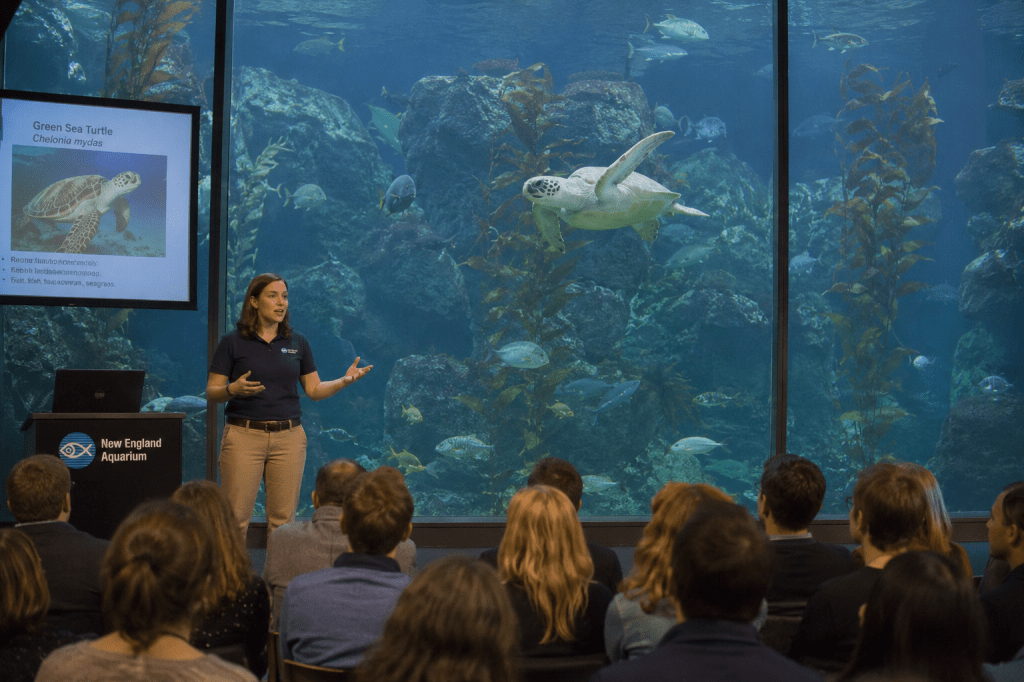
Barry considered this carefully.
“So Earth breathes underwater?” he whispered.
“Shhh,” hissed Alfie.
The lights dimmed.
This was the exact moment Barry became dangerous.
Because darkness plus boredom equalled ideas.
And ideas were Barry’s speciality.
At the far side of the theatre, a door glowed faintly with a staff-only sign.
Barry nudged Marmaduke.
“Adventure?”
“Will there be snacks?”
“Almost definitely.”
Marmaduke nodded solemnly.
“Then we must go.”
They slid off their seats like tiny escaping criminals.
Meanwhile, the marine biologist was explaining sustainable fishing.
“Overfishing damages delicate ecosystems—”
Mrs Patterson turned to check the row.
Two empty seats.
Her soul left her body briefly.
Barry and Marmaduke wandered down a quiet corridor lined with bubbling tanks.
A jellyfish floated past.
“Looks like Daddy’s brain during tax season,” Barry observed.
Marmaduke nodded respectfully despite not understanding what taxes were.
They discovered a door labelled FEED PREPARATION.
Inside were buckets of fish.
Lots of fish.
The room smelled like someone had wrapped a harbour in old socks.
Barry’s eyes widened.
“This,” he whispered, “is brilliant.”
“Can we eat them?”
“No, Marmaduke. They’re for sea creatures.”
Marmaduke looked relieved.
Then they spotted another sign.
CONGER EELS — 11:30 FEEDING.
Barry grinned slowly.
Now, a sensible child would have left immediately.
Barry was not a sensible child.
Barry was the reason warning labels existed.
Meanwhile, Mrs Patterson had activated Full Teacher Panic Mode.
“ALFIE,” she whispered fiercely, “where is your brother?”
Alfie closed his eyes.
“Probably committing crimes.”
“What?”
“Not real crimes. Mostly button crimes.”
Mrs Patterson inhaled sharply into a paper bag someone had thoughtfully provided.
Back at the eel tank, Barry and Marmaduke stared into dark water.
Something enormous moved beneath the surface.
Marmaduke squeaked.
“It’s like a sausage made of nightmares.”
A giant conger eel emerged, opening its mouth.
Barry loved it instantly.
“He looks hungry.”
At that exact moment, Barry remembered lunch.
Each child had been given a packed lunch in a little paper bag.
Barry opened his.
Cheese sandwich.
Apple slices.
One squashed yoghurt tube.
Penguin biscuit.
Marmaduke gasped. “Treasure.”
Barry looked from lunch… to eel.
Then he smiled the smile of a child moments before adults start filling out paperwork.
“What if,” Barry said slowly, “we shared?”
“With friendship?”
“With eels.”
Marmaduke considered this.
“That seems educational.”
So the boys began posting bits of sandwich into the tank.
The eel lunged upward.
Marmaduke screamed with delight.
“He LIKES cheddar!”
Soon both boys were giggling hysterically while feeding an increasingly enthusiastic conger eel pieces of preschool lunch.
Unfortunately, they were not alone.
A horrified aquarium worker appeared behind them.
“WHAT ARE YOU DOING?”
Barry turned.
“Community outreach?”
The worker stared at the floating yoghurt tube.
“You cannot feed the exhibits!”
“But he looked peckish,” said Barry.
“Eels don’t eat cheese sandwiches!”
The conger eel snapped up another triangle enthusiastically.
The worker rubbed his temples.
“Apparently this one does now.”
Elsewhere, Mrs Patterson was seconds from notifying the police, the navy, and possibly NASA.
Then Alfie spotted crumbs.
“Barry trail,” he said grimly.
“What?”
“He sheds carbohydrates when nervous.”
They followed a line of biscuit fragments through the aquarium.
Past sharks.
Past rays.
Past a toddler licking glass.
Finally they heard shrieking laughter.
Mrs Patterson rounded the corner.
And froze.
Barry stood beside the tank shouting, “THIS ONE LOVES YOGHURT!”
Marmaduke was clapping.
The eel was having what appeared to be the best day of its entire eel life.
Mrs Patterson made a sound usually heard from injured walruses.
“BARRY.”
Barry turned happily.
“Oh hello.”
“Why,” Mrs Patterson asked in the voice of someone trying not to explode, “are you feeding dairy products to aquatic predators?”
Barry thought carefully.
“World Oceans Day?”
Even Alfie looked impressed by the boldness of that answer.
The aquarium worker escorted everyone to a small office.
Barry swung his legs cheerfully.
Marmaduke asked for a biscuit.
Alfie sat with the posture of a disappointed grandfather.
Mrs Patterson apologised approximately forty-seven times.
“It’s entirely my fault,” she said weakly.
“No,” said the aquarium worker. “It’s mostly his.”
He pointed at Barry.
Barry smiled proudly.
The worker sighed.
“Oddly enough, the eel’s fine. Conger eels eat fish, squid, crustaceans…”
“And cheese?” asked Barry hopefully.
“NO CHEESE, BARRY.”
“Right.”
Pause.
“What about ham?”
“NO HAM.”
Marmaduke raised his hand. “What about crisps?”
Mrs Patterson looked ready to walk directly into the Thames.
Eventually the worker softened.
“To be fair,” he admitted, “the boys do seem interested in marine life.”
Barry beamed.
“I like creatures with teeth.”
“Of course you do,” muttered Alfie.
The worker crouched beside them.
“Do you know why World Oceans Day matters?”
Barry shrugged.
“So fish feel appreciated?”
“A little,” said the worker with a smile. “But mainly because oceans help everyone on Earth. They give us oxygen, food, weather systems, and homes for millions of animals.”
Marmaduke’s eyes widened. “Even sea potatoes?”
“Sea cucumbers,” corrected Alfie automatically.
“They still look like potatoes.”
The worker nodded. “If people pollute the oceans or overfish them, lots of creatures suffer.”
Barry looked thoughtful for once.
He glanced at the giant eel swimming through the tank.
“So… if rubbish gets in the sea, he could get poorly?”
“That’s right.”
Barry frowned deeply.
Children rarely stop to think, but when they do, adults become alarmed because it usually means either emotional growth or glue is involved.
“I don’t want him poorly,” Barry said quietly.
The worker smiled.
“That’s why we protect oceans.”
Barry nodded.
Then immediately ruined the moment.
“Can I still call him Captain Noodleface?”
The worker laughed despite himself.
“Yes. Absolutely.”
By lunchtime, the preschool class had finally settled in the café area.
Unfortunately, Barry and Marmaduke no longer had lunches.
The conger eel had eaten most of them.
Mrs Patterson pinched the bridge of her nose.
“I suppose,” she sighed, “I’ll buy extra sandwiches.”
Alfie folded his arms.
“You should apologise.”
Barry considered this seriously.
Then he walked to the eel tank.
“Sorry for the yoghurt,” he said.
The eel stared blankly.
“Very mature apology,” Alfie muttered.
Marmaduke waved. “Goodbye, Captain Noodleface!”
The trip home on the Tube was quieter.
Mostly because Mrs Patterson had strategically seated Barry between herself and Alfie like a highly dangerous prisoner transport.
Outside the windows, London blurred by in grey and gold streaks.
Barry leaned against Alfie sleepily.
“Did we save the oceans today?”
Alfie snorted.
“No.”
“Oh.”
“You definitely confused them though.”
Barry smiled.
“That still counts a bit.”
Alfie looked down at his little brother.
Barry was sticky, chaotic, impossible, loud, and one hundred percent exhausting.
But he was also curious.
And curious people sometimes caused trouble before they learned how to cause change.
“Maybe a tiny bit,” Alfie admitted.
Barry grinned triumphantly.
Then Marmaduke whispered loudly from across the carriage:
“Next time should we visit the penguins?”
Barry’s eyes lit up.
“Oh yes.”
Alfie closed his eyes in despair.


Leave a Reply